

NCA Center for Communication, Community CollaboratioN, and Change (CCCC)
Started by Communication Studies faculty from UNC Greensboro, the NCA Center for Communication, Community Collaboration, and Change (CCCC) seeks to facilitate partnerships with community-based organizations that create sustainable change for underrepresented and/or vulnerable communities through the production and application of communication-related scholarship and practice that lead to measurable outcomes for its community partners.
The CCCC supports its mission through a micro-grants funding program that supports community-based projects with potential for significant community impact. These projects must involve close partnerships among university partners, community partners, and organizations serving those communities (when relevant).

Democracy Tables is one community-based project that is funded by CCCC. The CCCC believes that when the best of communication praxis is coupled with community-based social justice efforts, communities tend to benefit.
Community Partners
The following list of some of our community partners illustrates the breadth of our community-engaged scholarship.
Advocacy, Peace & Justice
- Democracy Greensboro
- Guilford Education Alliance
- National Conference for Community and Justice of the Piedmont Triad
- Aim Higher Now
- Beloved Community Center
- League of Women Voters
Arts & Culture
- Greensboro Historical Museum
City of Greensboro & Guilford County
- City of Greensboro
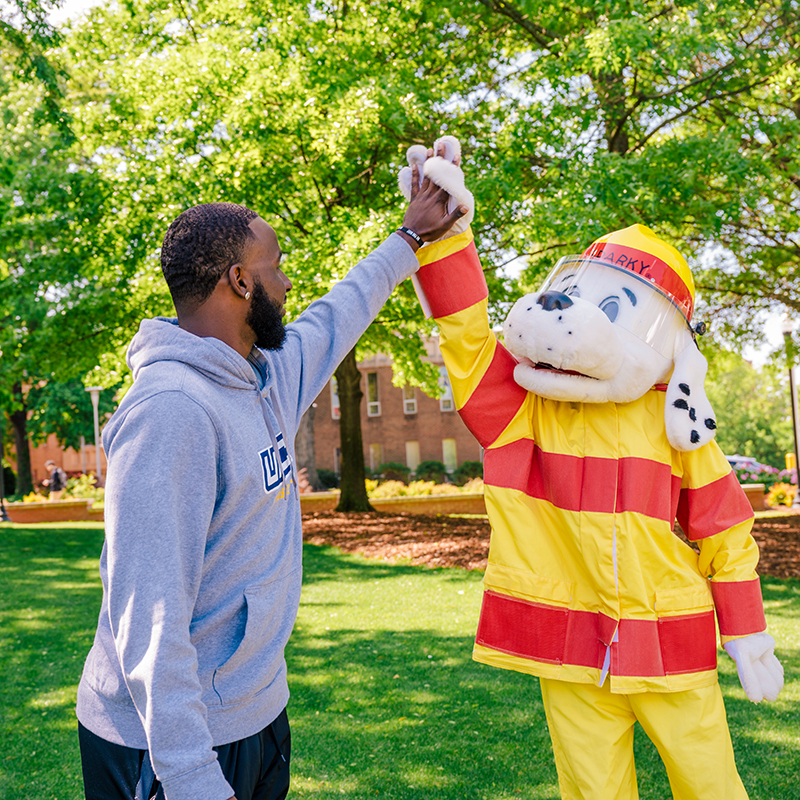
- Greensboro Fire Department
- Greensboro Transit Authority
- Kathleen Clay Edwards Family Library
Community Development
- Greater Glenwood Neighborhood Association
- Greensboro Participatory Budgeting
- NC Folk Festival
- Renaissance Community Coop
Disability Rights & Services
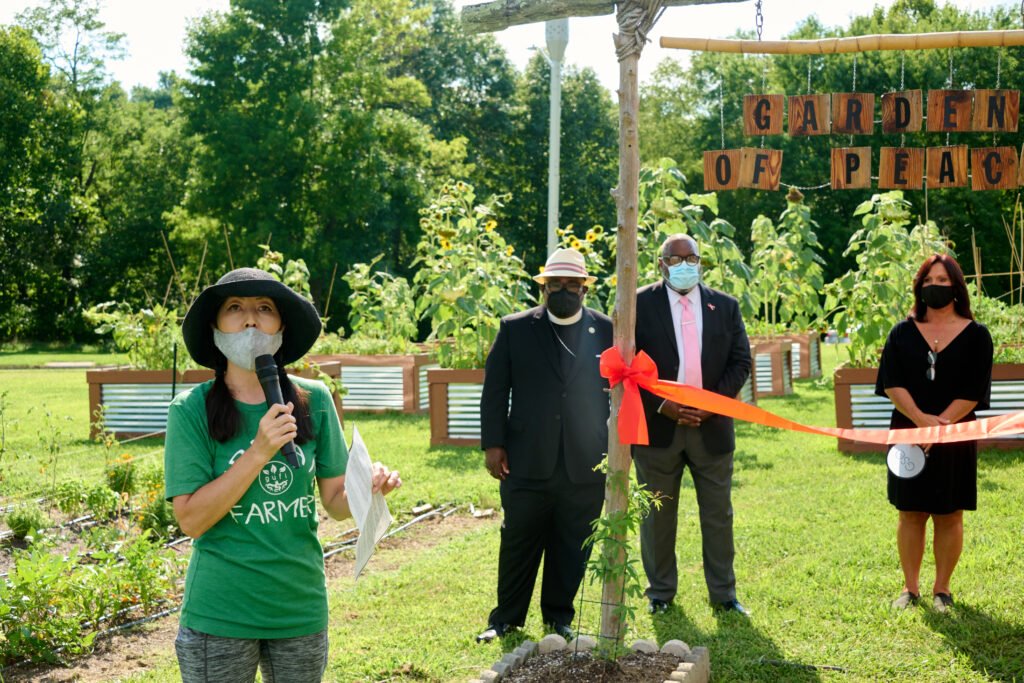
- Peacehaven Community Farm
- After Gateway
- HORSEPOWER Therapeutic Learning Center
Economic Development
- Action Greensboro
- Center for Creative Leadership
Education
- Dudley High School
- Guilford County Schools
- Hope Academy
Health and Wellness
- Sierra Club of the Piedmont Plateau
Human Services
- Family Justice Center
- Family Service of the Piedmont
- Step Up Ministry
- YWCA, Teen Parent Mentor Program
Homelessness & Housing
- Greensboro Urban Ministry
- Interactive Resource Center
- Greensboro Housing Coalition
Immigration & Refugees
- Center for New North Carolinians
- Church World Service
- New Arrivals Institute
Youth Tutoring/Mentoring
- YMCA
- YWCA
Community-Engaged Research
“Dedicated to fostering and promoting free and ethical communication, the NCA promotes the widespread appreciation of the importance of communication in public and private life, the application of competent communication to improve the quality of human life and relationships, and the use of knowledge about communication to solve human problems.”
— National Communication Association
Kimberly M. Cuny (MFA, University of North Carolina Greensboro) focuses on the radical pedagogy of multiliteracy speaking center studies as a means of both lifting marginalized voices and providing student educators with agency. As a North Carolina Theatre for Young People teaching artist, her theatre work focuses on utilizing storytelling and process drama to help children of all ages and adults with intellectual and/or developmental disabilities make sense of the world around them.
Cristiane S. Damasceno (Ph.D., North Carolina State University) studies digital cultures with an emphasis on participation in learning communities and inclusion of populations with little experience using networked technologies. Her work addresses three overarching questions: 1) How do digital media open new possibilities for learning? 2) How do socioeconomic structures and power relations shape participation in communities of practice? 3) How do learners appropriate educational resources for their benefit? She uses both traditional and innovative approaches to qualitative methods to explore these questions, in particular, digital ethnography.
Spoma Jovanovic (Ph.D., University of Denver) conducts long-term ethnographic and community-based research programs in partnership with schools, grassroots organizations, and local nonprofits to consider: 1) the communication features that shape public interactions and the factors individuals and groups point to for the success or failure of their social change initiatives; and, 2) how specific pedagogies and curriculum foster democratic sensibilities to inspire participation in public, political action.
Pete Kellett (Ph.D., Southern Illinois University) focuses on the centrality of storytelling and narrative in how people create and transform relationships. He is particularly interested in narrative approaches to understanding and transforming conflicts in close personal relationships. He also has ongoing interests in health communication, narrative approaches to disability studies, and positive communication.
Etsuko Kinefuchi (Ph.D., Arizona State University) studies communicative and cultural constructions of environmental and sustainability issues and of human relationship with the more-than-human world. She is interested in how communication may be mobilized to advance ecojustice that recognizes the interconnectedness of diverse beings.
Marianne LeGreco (Ph.D., Arizona State University) researches the relationship between food policy, nutrition promotion programs, and healthy eating practices. Her current work focuses on: 1) urban farming and other community food programs; 2) theorizing access as an important concept for health communication; 3) mapping geographic and discursive structures of food deserts; 4) developing a measure of health literacy geared toward food practices; and, 5) community-based participatory research including discourse tracing and multiple methods.
Loreen Olson (Ph.D., University of Nebraska, Lincoln) conducts research on gender, family, and interpersonal communication, focusing on the dark side of communication and the communicative management of identities on the margins. She has published on the dark side of family communication, intimate partner violence, campus sexual assault, the discourse of motherhood, family secrets, verbal aggressiveness, and the luring communication of child sexual predators. Her current projects examine 1.) intimate partner violence and traumatic brain injury, 2.) the discourse of the breast-is-best paradigm and hegemonic mothering, and 3.) graduate students’ experiences with sexual harassment.
Christopher N. Poulos (Ph.D., University of Denver) conducts auto/ethnographic and narrative research into communication in close relationships, with a particular focus on family and friendship stories, family identity, secrecy and stigma, communication breakdowns, and dialogue. His current work focuses on 1) how people shape their communicative lives through memory, storytelling, dialogue, and secret keeping; and, 2) how communicative practices, in turn, shape our individual and collective relational identities.
Jenni M. Simon (Ph.D University of Denver) Dr. Simon’s research focuses on gender and cultural issues, as well as the critical and rhetorical intersections that exist between culture and social movement. Her most recent work explores feminism and social change, resistance to women’s movements, women in organizations and politics, and the changing role of motherhood in the post-modern area. Dr. Simon has published in Communication Review, Southern States Communication Journal, Western Communication Journal, Women and Language and in the Proceedings on the International Conference of Gender Research. She is the co-editor of Michelle Obama: First Lady, American Rhetor and the author of Consuming Desire and Agency: Stories of Love, Laughter, and Empowerment. Dr. Simon is also the co-author of Trump in the Land of Oz: Pathologizing Hillary Clinton and the feminine body, a chapter published in Nasty women and bad hombres: Historical reflections on the 2016 Presidential Election. Dr. Simon is a past Chair of the Southern States Communication Association’s Gender and Women’s Studies Division.